

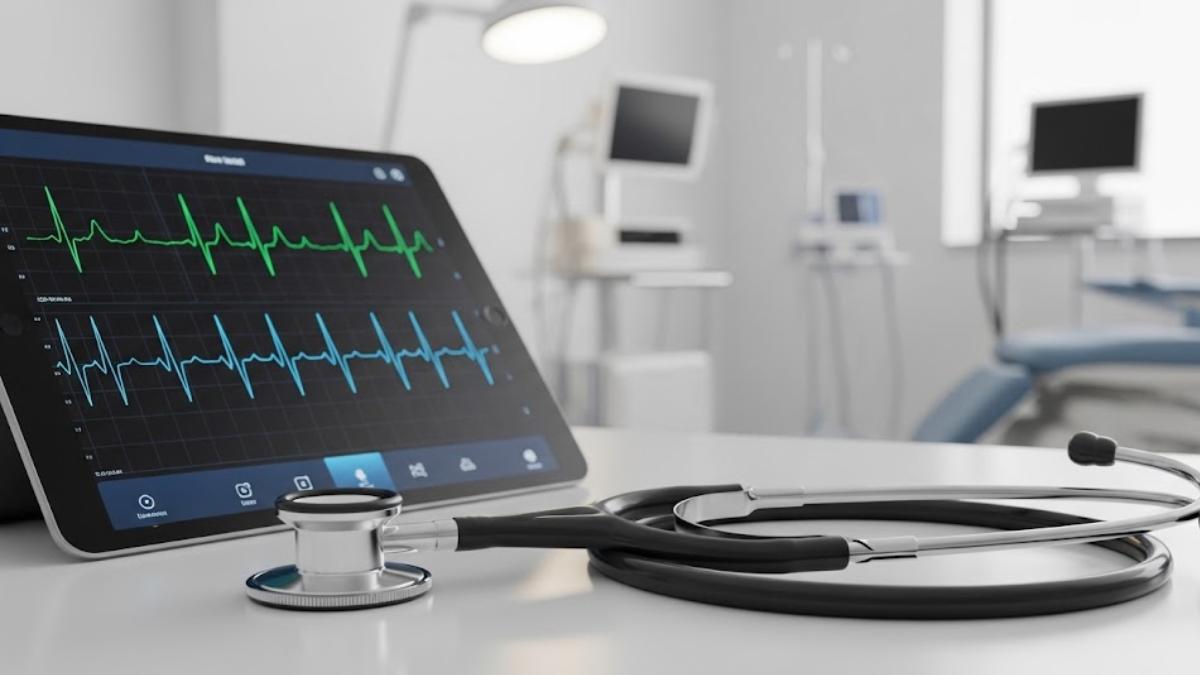

Explore everything about Fonendi: from traditional acoustic models to high-tech digital versions. A complete buyer’s guide for doctors and nurses.
also read: https://soutaipassu.com/fsi-blogs-us/
Introduction
The Fonendi, a term widely used to describe the stethoscope or phonendoscope, is undoubtedly the most iconic tool in the medical profession. Beyond being a symbol of authority and care, it represents the first true diagnostic bridge between the healthcare professional and the patient. Through the auscultation of internal sounds—such as heartbeats, lung murmurs, and intestinal noises—Fonendi allow clinicians to gather vital information non-invasively and instantly.
In this comprehensive guide, we will explore the world of these essential devices. We will analyze how technology has transformed a simple wooden tube into sophisticated digital instruments capable of amplifying body sounds by more than 40 times, ensuring precision in every diagnosis.
Historical Evolution: From the Simple Tube to Modern Fonendi
The history of Fonendi officially began in 1816, thanks to the ingenuity of French physician René Laennec. Before his invention, doctors practiced “immediate auscultation,” which involved placing their ear directly on the patient’s chest. Due to modesty concerns and the difficulty of hearing sounds in overweight patients, Laennec rolled up a sheet of paper to create a cylinder. This simple act birthed the first monaural stethoscope.
As the decades passed, the instrument underwent constant evolution:
- 19th Century: Introduction of binaural models (for both ears) and flexible rubber tubing replaced rigid wooden structures.
- 1960: Dr. David Littmann, a Harvard cardiologist, patented a new type of stethoscope with revolutionary acoustic performance, making it lightweight yet powerful.
- Today: Modern Fonendi integrate tunable diaphragms, ambient noise reduction technologies, and Bluetooth connectivity for telemedicine and recording.
The Anatomy of Professional Fonendi
To choose the right instrument, it is essential to understand the components that determine the quality of auscultation. High-quality Fonendi are not just plastic tubes; they are precision acoustic systems designed to filter out interference and highlight critical frequencies.
1. The Chestpiece
This is the heart of the device. It can be single-headed or double-headed. In double-headed models, we typically find:
- The Diaphragm (Membrane): The flat side, ideal for listening to high-frequency sounds like heartbeats and normal respiration.
- The Bell: The concave side, specifically designed for low-frequency sounds, such as certain heart murmurs or deep vascular sounds.
2. The Tubing
The material of the tube must be durable yet flexible. Premium Fonendi use dual-lumen tubing to isolate external noises and prevent “rubbing” interference caused by the tube touching itself or the doctor’s clothing.
3. Headset and Eartips
The headset (binaurals) should be adjustable to fit the clinician’s head shape perfectly. The eartips must provide a tight acoustic seal in the ear canal without causing discomfort during long hospital shifts.
Comparison of Top Brands for Fonendi in 2026
While many manufacturers exist, professional choice usually narrows down to a few established brands. Below is a comparison based on performance, durability, and value for money.
| Brand | Flagship Model | Key Strengths | Price Range |
|---|---|---|---|
| 3M Littmann | Cardiology IV | Excellent acoustics, decade-long durability. | High ($$$) |
| MDF Instruments | ProCardial | Lifetime warranty, free parts for life. | Medium ($$) |
| Riester | Duplex 2.0 | Lightweight design and ergonomic feel. | Medium ($$) |
| ADC | Adscope 603 | Great acoustics at a budget-friendly price. | Entry ($) |
Different Types of Fonendi: Which One Is Right for You?
Not all Fonendi are created equal. Your choice should depend on your clinical specialization and the environment in which you work.
Cardiology Fonendi
These are designed for maximum acoustic sensitivity. They often feature thicker tubing and specialized membranes capable of capturing subtle murmurs that might be missed by a standard instrument. They are essential for cardiologists, pulmonologists, and ICU staff.
Pediatric and Neonatal Fonendi
Children are not just small adults. These models have chestpieces with a reduced diameter (approx. 2.5 cm for pediatric and even smaller for neonatal) to fit small thoracic surfaces and isolate sounds without interference from the surrounding environment.
Electronic and Digital Fonendi
These represent the future of diagnostics. These devices can amplify sounds up to 40–100 times, offer active noise reduction (ANR), and allow for the recording of auscultations. These recordings can be shared with colleagues or uploaded to digital health records. They are ideal for professionals with hearing impairments or those working in loud environments like emergency rooms.
Maintenance and Care: Making Your Fonendi Last
A high-quality Fonendi can last a lifetime if treated with care. Follow these golden rules for maintenance:
- Regular Disinfection: Clean the diaphragm and eartips with 70% isopropyl alcohol after every patient.
- Tube Protection: If you carry your instrument around your neck, ensure the tube rests on your collar rather than your skin. Prolonged contact with skin oils can cause the PVC to stiffen and crack.
- Avoid Extreme Temperatures: Never leave your device on a car dashboard or in freezing conditions, as this can degrade the elastic materials.
FAQs About Fonendi
1. What is the actual difference between a stethoscope and a phonendoscope? Technically, a stethoscope is for chest sounds (heart/lungs), while a phonendoscope is for internal organs in general. Today, they are used as synonyms because almost all modern tools are “stetho-phonendoscopes” or simply Fonendi.
2. Why does my Fonendi sound “faint”? The issue is often incorrectly inserted eartips (they must point toward your nose) or earwax buildup in the headset. Also, check if the chestpiece is “open” on the side you are using.
3. Can I use adult Fonendi on a child? In an emergency, yes, but it isn’t ideal. A large chestpiece will pick up too much ambient noise and won’t seal properly against a child’s ribs, making it hard to distinguish specific sounds.
4. How much should I spend on a professional model? A reliable model for students or nurses starts around $80–$100. Specialist cardiology or electronic models can easily exceed $300–$500.
5. Are short-tube Fonendi better than long-tube ones? Theoretically, shorter tubes transmit sound better with less loss. However, longer tubes offer more comfort and a safer working distance from the patient.
6. What are “Free Parts for Life” programs? Brands like MDF offer programs where they send you free eartips, diaphragms, and non-chill rings for the life of the instrument if they wear out.
7. How can I tell if a Littmann is authentic? Originals have a flawless metallic finish, a laser-engraved logo, and a unique serial number on the chestpiece that can be verified on the 3M website.
8. How does a tunable diaphragm work? It allows you to hear different frequencies by simply varying pressure: light pressure for low frequencies and firm pressure for high frequencies.
9. Can I change the color of my tube later? Only by purchasing a completely new binaural/tube assembly. However, you can personalize your device with ID tags to prevent loss or theft in the ward.
10. Are there specific Fonendi for hearing aid users? Yes, digital models can connect directly to hearing aids via cables or Bluetooth, solving auscultation challenges for hearing-impaired clinicians.
Conclusion
Choosing from the various Fonendi available on the market requires a careful evaluation of your clinical role and your budget. Whether you opt for a classic acoustic model for daily practice or an advanced digital device for telemedicine, the key is to prioritize clarity, comfort, and durability. A good pair of Fonendi is not just a purchase; it is an investment in your diagnostic capability and the long-term health of your patients.