


The speed at which a company can transform an abstract idea into a physical, tangible object often dictates its market success. For decades, the traditional manufacturing funnel required months of painstaking labor, expensive tooling, and manual corrections before a single functional prototype could be held or tested. This slow cycle frequently caused massive bottlenecks, leaving brilliant innovations stuck in development limbo.
also read:https://soutaipassu.com/zimmerkamine/
Enter the disruptive power of modern product development. By utilizing automated additive manufacturing, subtractive techniques, and smart software, creators can now bypass traditional barriers entirely. This comprehensive guide explores the ins and outs of this paradigm shift, diving deep into how rapid prototyping is reshaping industries, accelerating innovation, and changing the way we bring ideas to life.
Defining the Core Concept: What is Rapid Prototyping?
To understand its massive impact, we must first break down what this approach actually entails. At its core, it is a group of specialized techniques used to quickly fabricate a physical model of a part or assembly using three-dimensional computer-aided design (CAD) data.
Instead of waiting weeks for a factory to create custom molds or setup heavy machinery, engineers and designers use automated systems to construct a model in a fraction of the time. The primary objective is to create a physical representation that can be used for testing form, fit, and function, allowing teams to iterate designs fluidly.
The Iterative Cycle of Development
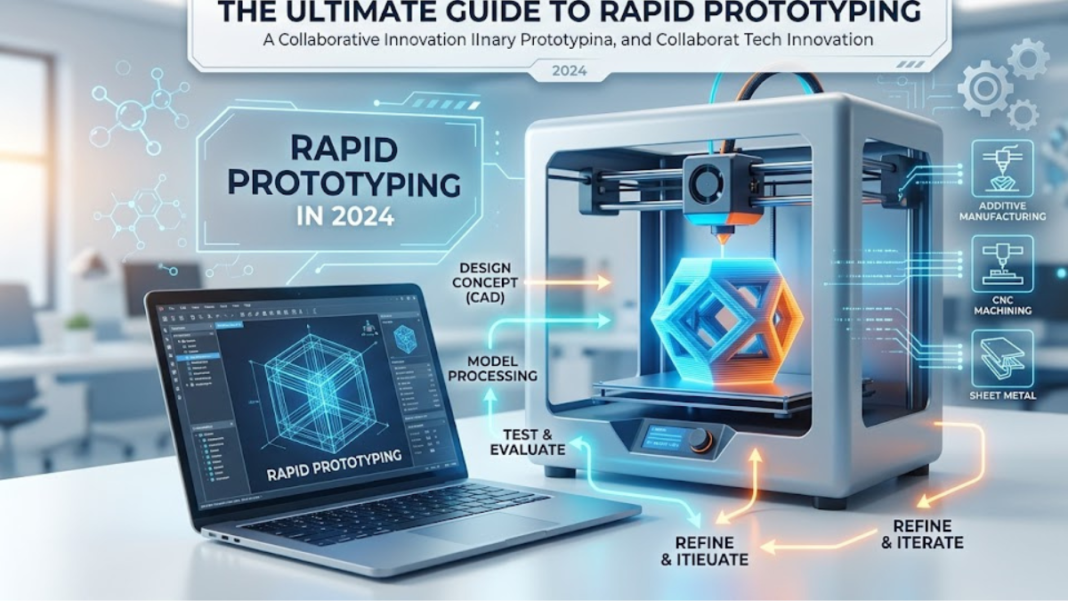
The beauty of this framework lies in its cyclical nature, often referred to as the “Design-Build-Test” loop. By keeping this loop short and highly efficient, design teams minimize risk and optimize product performance early in the pipeline.
- Design: A concept is drafted using advanced 3D modeling software, defining exact specifications and geometries.
- Build: The digital file is processed by slicing software and sent to an automated machine to construct the physical object.
- Test: The physical prototype is thoroughly evaluated for structural integrity, ergonomics, and aesthetic appeal.
- Refine: Feedback from the testing phase is fed directly back into the digital model, starting the process anew.
Key Methodologies in the Prototyping Ecosystem
Modern manufacturing utilizes a diverse suite of technologies to achieve quick turnaround times. Depending on the material requirements, budget, and intended application, different techniques are deployed to achieve the best results.
1. Additive Manufacturing (3D Printing)
Additive manufacturing is the most common and recognizable form of rapid fabrication. It builds parts layer by layer, adding material only where it is strictly required by the digital blueprint.
Within this category, several distinct technologies exist. Fused Deposition Modeling (FDM) melts plastic filaments to draw layers, making it highly affordable and accessible. Stereolithography (SLA) uses a high-precision ultraviolet laser to cure liquid resin into solid plastic, offering incredibly smooth surface finishes and fine details. For industrial metals, Selective Laser Sintering (SLS) fuses powdered materials using a high-powered laser, creating exceptionally strong and complex components without needing structural supports.
2. Subtractive Prototyping (CNC Machining)
While additive processes build things from the ground up, subtractive methods do the exact opposite. Computer Numerical Control (CNC) machining starts with a solid block of raw material—such as aluminum, steel, or heavy-duty plastics—and uses high-speed rotating cutting tools to carve away excess material.
This technique is highly valued when a prototype requires specific material properties, tight mechanical tolerances, or structural strength that 3D printers cannot yet match. It provides a direct look at how a final, mass-produced part will behave under real stress.
3. Formulative Prototyping (Rapid Injection Molding)
When a project requires more than just one or two test units, formulative methods bridge the gap between initial concept testing and full-scale production. By using softer, easily machinable materials like aluminum to create temporary molds, manufacturers can produce low volumes of identical plastic parts in days rather than months. This allows companies to conduct real-world consumer testing with final-grade production plastics.
Choosing the Right Approach: A Comparative Overview
Every product development journey is completely unique, requiring different compromises between speed, cost, and physical fidelity. The following table provides a clear comparison of the most popular methodologies to help you identify the best tool for your project needs.
| Prototyping Technique | Compatible Materials | Ideal Use Case | Relative Cost & Speed |
| Fused Deposition Modeling (FDM) | Production plastics (PLA, ABS, PETG) | Early-stage concept models and basic fit testing. | Very low cost; exceptionally fast. |
| Stereolithography (SLA) | Photopolymer resins (Standard, Flexible) | Visual presentations, highly detailed models, and cosmetic evaluations. | Moderate cost; fast turnaround. |
| Selective Laser Sintering (SLS) | Engineering nylons, composites | Functional mechanical testing, durable parts, complex geometries. | Higher cost; moderate speed. |
| CNC Machining | Metals (Aluminum, Steel), rigid plastics | High-stress functional testing, production-grade material verification. | Higher cost; dependent on complexity. |
Disruptive Real-World Applications Across Industries
The democratization of these quick-turn manufacturing tools has triggered a massive wave of innovation across a wide array of global commercial sectors.
- Aerospace & Automotive: Design teams use these systems to rapidly manufacture lightweight brackets, custom ductwork, and aerodynamic components. Testing these parts in wind tunnels within days of design creation saves millions of dollars in developmental overhead.
- Medical Devices & Healthcare: Surgeons use patient-specific organ replicas created from MRI scans to practice complex operations before making a single incision. Furthermore, the development of customized prosthetics and specialized surgical tools has been accelerated significantly.
- Consumer Electronics: From smartphones to smart-home devices, internal components, buttons, and ergonomic enclosures are printed and tested repeatedly to ensure seamless user interaction and structural durability.
- Architecture & Spatial Design: Instead of spending weeks hand-cutting cardboard or foam boards, architectural firms can effortlessly transform complex blueprints into highly detailed, multi-material scale models overnight.
Strategic Benefits: Why Speed Matters
Embracing an agile approach to physical product design yields significant competitive advantages that extend far beyond simply getting a physical object faster.
Drastic Risk Reduction
Discovering a fundamental design flaw after investing tens of thousands of dollars in heavy industrial steel tooling is a catastrophic financial setback. Fabricating affordable, high-fidelity models early in the development lifecycle allows teams to spot geometric conflicts, assembly issues, and material weaknesses when they are still incredibly cheap and simple to correct.
Accelerated Time-to-Market
In highly competitive markets, being the first to launch a product can dictate market dominance. By cutting weeks or months out of the development schedule, companies can refine their concepts, clear regulatory hurdles, secure investor funding with physical models, and pivot to mass production ahead of their competition.
Frequently Asked Questions
- What is the difference between a low-fidelity and a high-fidelity prototype?A low-fidelity model focuses entirely on basic shape and concept visualization, often made cheaply out of basic plastics. A high-fidelity model looks, feels, and functions almost exactly like the final commercial product, using production-grade materials and finishes.
- Can rapid prototyping be used for mass production?Generally, no. These technologies are tuned for low-volume speed and flexibility. However, direct manufacturing methods like SLS 3D printing are increasingly used to produce small runs of highly customized or geometrically complex end-use parts.
- What digital file formats are required to begin the process?Most automated manufacturing machinery relies on standardized 3D files. The most universally accepted formats are STL, STEP, and IGES, which can be exported by virtually all modern CAD applications.
- How do surface finishes vary across different 3D printing technologies?FDM printing typically leaves visible layer lines on the surface of the object. SLA and resin-based processes offer ultra-smooth, glass-like finishes, while SLS creates a slightly matte, grainy texture due to the powder-fusing process.
- Is it possible to prototype with multiple materials simultaneously?Yes. Specialized multi-material 3D printers can combine rigid plastics with rubber-like elastomeric materials in a single build, allowing engineers to create realistic overmolded grips, gaskets, and living hinges.
- What is “functional prototyping”?This refers to creating a working model using materials and tolerances that allow it to be subjected to real-world operational stress, thermal environments, and mechanical loads to prove the design functions correctly.
- How does topology optimization factor into this workflow?Generative design and topology optimization use AI algorithms to generate highly complex, organic shapes that maximize strength while minimizing weight. These intricate geometries are often impossible to make with traditional tools but can be easily built using additive manufacturing.
- Are the materials used in prototyping safe for food contact or medical use?While standard resins and filaments are not inherently safe, there is an extensive selection of specialized biocompatible, medical-grade, and FDA-compliant materials available specifically for healthcare and food testing applications.
- What is the environmental impact of additive vs. subtractive prototyping?Additive processes are inherently less wasteful because they only use the material required to build the part layer by layer. Subtractive methods (like CNC machining) create a significant amount of waste material in the form of recycled metal or plastic chips.
- Can rapid models be painted or post-processed?Absolutely. Prototypes can be sanded, polished, primed, painted, electroplated, and threaded with metal inserts to achieve an indistinguishable appearance from a final retail product.
Conclusion
The evolution of product design has permanently shifted away from slow, linear development models. By seamlessly blending digital CAD software with advanced additive and subtractive manufacturing tools, rapid prototyping empowers creators to iterate with unprecedented freedom. This agile workflow reduces financial risk, optimizes mechanical functionality, and brings innovations to market faster than ever before. In an era where agility defines long-term commercial success, the ability to rapidly convert a digital spark into a physical reality is the ultimate competitive advantage.