

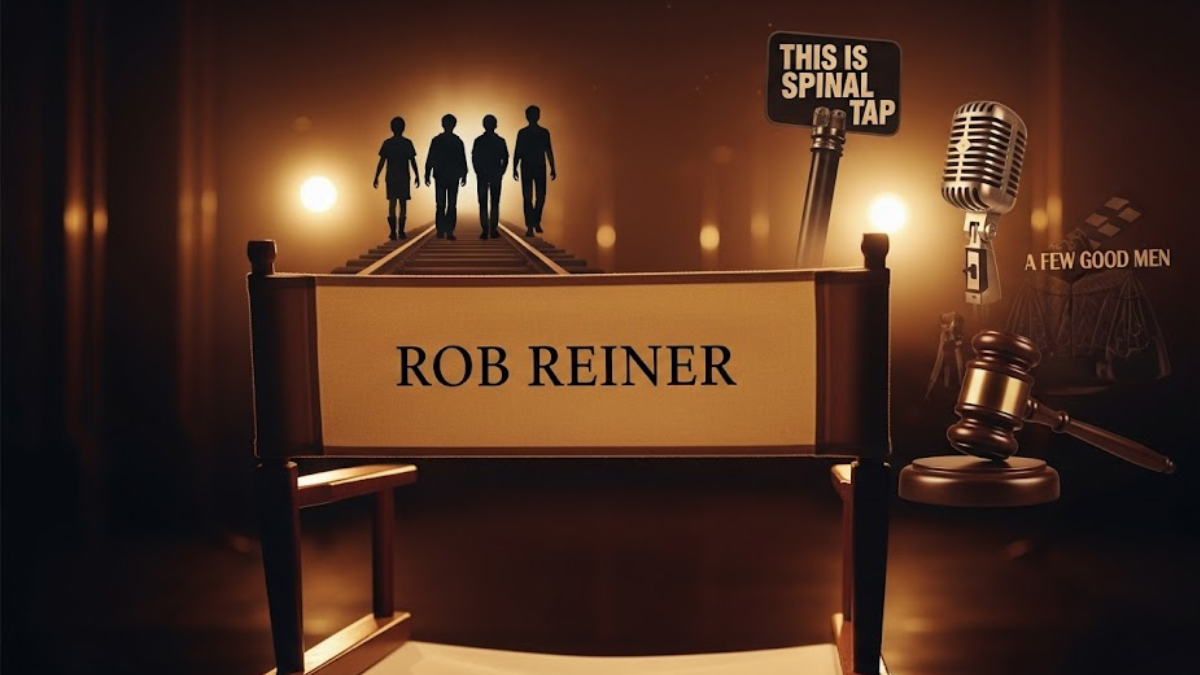

Explore the incredible career of Rob Reiner. From his breakout role in All in the Family to directing classics like The Princess Bride and Stand by Me.
also read:https://soutaipassu.com/michelle-trachtenberg/
Introduction
In the vast and often fickle landscape of American entertainment, few individuals have successfully navigated as many diverse roles as Rob Reiner. Known to many as a beloved actor, a visionary director, a prolific producer, and a passionate political activist, Reiner has left an indelible mark on Hollywood that spans over five decades. While his early fame was cemented in the living rooms of millions through television, it was his transition behind the camera that truly showcased his ability to capture the human condition across multiple genres, from slapstick mockumentaries to high-stakes legal dramas.
The name Rob Reiner is synonymous with a specific brand of American storytelling—one that prioritizes heart, humor, and a deep understanding of character. Whether he is exploring the nostalgic pains of childhood or the complexities of modern romance, Reiner’s work possesses a timeless quality that continues to resonate with new generations. In this comprehensive guide, we will delve into his upbringing, his iconic acting roles, his “golden run” as a director, and his enduring legacy as a cultural and political force.
The Early Years and the Shadow of Carl Reiner
Born on March 6, 1947, in the Bronx, New York, Rob Reiner was effectively born into the industry. His father, Carl Reiner, was a titan of early television and comedy, famous for The Dick Van Dyke Show and his collaboration with Mel Brooks on “The 2000 Year Old Man.” Growing up in a household frequented by comedic geniuses like Brooks and Sid Caesar, Rob was exposed to the mechanics of timing, wit, and narrative structure from a very young age.
Despite the advantage of his heritage, Reiner was determined to carve out his own path. He spent his early twenties honing his craft in improvisational comedy troupes and taking on small roles in various television shows. However, the shadow of his father’s immense success was a constant presence, driving Rob to find a voice that was distinctly his own. This drive eventually led him to a role that would make him a household name and change the face of American television forever.
The Meathead Phenomenon: All in the Family
In 1971, Rob Reiner was cast as Michael “Meathead” Stivic in the groundbreaking sitcom All in the Family. Playing the liberal, long-haired son-in-law to Carroll O’Connor’s bigoted Archie Bunker, Reiner became a symbol of the generational divide that defined 1970s America. The show was revolutionary for its willingness to tackle taboo subjects such as racism, sexism, and the Vietnam War, and Reiner’s Michael provided the necessary intellectual and ideological counterpoint to Archie’s prejudice.
Reiner’s performance earned him two Primetime Emmy Awards and cemented his status as a premiere television actor. However, after several years on the show, he felt a creative restlessness. He didn’t want to be remembered only as Archie Bunker’s foil; he wanted to tell his own stories. This period of transition marked the beginning of one of the most successful directorial streaks in Hollywood history.
A Directorial Masterclass: The Golden Run
When Rob Reiner stepped behind the camera, he did so with a confidence that belied his status as a first-time director. His debut feature, This Is Spinal Tap (1984), practically invented the modern mockumentary genre. By satirizing the excesses of 1980s heavy metal bands, Reiner created a film that was so authentic in its absurdity that some audiences initially believed the band was real. The film’s dialogue was largely improvised, showcasing Reiner’s ability to guide creative talent without stifling spontaneity.
Following the success of Spinal Tap, Reiner embarked on a streak of films that are now considered cornerstones of American cinema. Each project was vastly different from the last, yet all bore his signature focus on character and emotional honesty.
- Stand by Me (1986): Adapted from a Stephen King novella, this film is widely considered one of the greatest coming-of-age stories ever told. Reiner captured the bittersweet transition from childhood to adolescence with a poignancy that few other directors have matched.
- The Princess Bride (1987): A genre-defying masterpiece that combined fairy-tale romance, swashbuckling adventure, and meta-comedy. It struggled initially at the box office but has since become a cult classic with some of the most quotable lines in movie history.
- When Harry Met Sally… (1989): Written by Nora Ephron and directed by Reiner, this film redefined the romantic comedy. It asked the age-old question of whether men and women can truly be friends without sex getting in the way, and it did so with a wit and realism that felt entirely fresh.
Mastering the Thriller: Misery and A Few Good Men
Entering the 1990s, Rob Reiner proved he was more than just a purveyor of “feel-good” movies. He returned to the world of Stephen King for Misery (1990), a chilling psychological thriller that earned Kathy Bates an Academy Award for Best Actress. Reiner’s direction was taut and claustrophobic, proving he could master suspense just as easily as he did comedy.
He followed this with A Few Good Men (1992), a high-stakes legal drama based on Aaron Sorkin’s play. The film was a massive critical and commercial success, earning an Academy Award nomination for Best Picture. Reiner’s ability to handle Sorkin’s rapid-fire dialogue while maintaining the tension of a military courtroom solidified his reputation as a director at the peak of his powers.
| Film Title | Release Year | Genre | Core Theme |
|---|---|---|---|
| This Is Spinal Tap | 1984 | Mockumentary | Satire of fame and music culture |
| Stand by Me | 1986 | Drama / Coming-of-Age | The loss of innocence and friendship |
| The Princess Bride | 1987 | Fantasy / Adventure | True love and legendary heroism |
| When Harry Met Sally… | 1989 | Rom-Com | The complexity of adult relationships |
| Misery | 1990 | Thriller / Horror | Obsession and the price of creativity |
| A Few Good Men | 1992 | Legal Drama | Honor, duty, and truth in the military |
Rob Reiner’s Creative Philosophy and Style
What separates a Rob Reiner film from the work of his contemporaries is his unwavering commitment to the “human” element. In an industry that increasingly relies on spectacle and special effects, Reiner’s films are built on conversations. He is a director who trusts his actors and his scripts. This philosophy often involves long rehearsal periods where the cast can find the rhythm of their characters before a single frame is shot.
His style is often described as “invisible direction.” He doesn’t use flashy camera angles or jarring edits to draw attention to himself. Instead, he places the camera in the best position to capture the emotional truth of a scene. This humility in direction allows the audience to forget they are watching a movie and instead feel as though they are witnessing real life—even if that life involves a dread pirate or a heavy metal band with an eleven-inch Stonehenge.
Beyond the Camera: Political Activism and Social Impact
In addition to his cinematic contributions, Rob Reiner is equally well-known for his deep commitment to social and political causes. He has been a vocal advocate for early childhood education, famously co-founding the “I Am Your Child” Foundation. His activism isn’t just about celebrity endorsements; he has been deeply involved in the legislative process, helping to pass Proposition 10 in California, which provided significant funding for early childhood development.
Reiner has also been a prominent figure in the fight for marriage equality. He was a key supporter of the American Foundation for Equal Rights, which successfully challenged California’s Proposition 8 in federal court. For Rob Reiner, the platform provided by Hollywood is a tool to be used for the betterment of society. He often uses his social media presence to engage in political discourse, never shying away from controversial topics if he believes they are a matter of justice or civil rights.
The Enduring Influence of Rob Reiner in Modern Cinema
As we look at the landscape of modern cinema in 2026, the influence of Rob Reiner remains pervasive. The mockumentary style he pioneered with Spinal Tap can be seen in everything from The Office to What We Do in the Shadows. His approach to the romantic comedy remains the blueprint for writers who want to create stories that are both funny and emotionally resonant.
Furthermore, his transition from a successful actor to an even more successful director served as a roadmap for future generations of talent, such as Greta Gerwig or Jordan Peele. He proved that an intimate understanding of acting could be the greatest asset a director can have.
Frequently Asked Questions
1. Is Rob Reiner still directing movies today? Yes, Rob Reiner remains active in the industry. While his output has slowed compared to his “golden run,” he continues to develop new projects and recently directed a sequel to This Is Spinal Tap, bringing the original band members back together.
2. Did Rob Reiner write the movies he directed? While he is a talented writer, he is primarily known for his directorial collaborations with great writers like Nora Ephron, William Goldman, and Aaron Sorkin. He is an expert at interpreting and elevating a script.
3. What is Rob Reiner’s net worth? As of 2026, his net worth is estimated to be around $100 million, a result of his decades-long success in television and film as both an actor and a director.
4. Has Rob Reiner ever won an Oscar? While he has been nominated for several Academy Awards (most notably for A Few Good Men), he has never won an individual Oscar. However, many of the actors he directed have won, which he considers a point of pride.
5. How did Rob Reiner get the nickname “Meathead”? The nickname was given to his character in All in the Family by his father-in-law, Archie Bunker. Archie used it to imply that Michael was “dead from the neck up,” despite Michael being the most educated person in the house.
6. What is Castle Rock Entertainment? Rob Reiner co-founded Castle Rock Entertainment in 1987. The company was named after the fictional town in Stephen King’s stories and went on to produce many of Reiner’s hits, as well as the legendary sitcom Seinfeld.
7. Was Rob Reiner’s father Carl Reiner involved in his movies? While they were very close, Carl generally stayed out of Rob’s professional directing career to allow his son to build his own reputation. However, Rob did direct his father in the film The Spirit of ’76.
8. Is Stand by Me a true story? It is based on the semi-autobiographical novella The Body by Stephen King. While fictional, King has stated that many of the emotions and character dynamics were drawn from his own childhood experiences.
9. Why is When Harry Met Sally… considered so important? It was one of the first romantic comedies to focus on “the talk”—how men and women communicate. It avoided many of the slapstick clichés of the time and focused on a realistic, multi-year friendship.
10. What are Rob Reiner’s views on the future of Hollywood? Reiner has often expressed concern about the decline of middle-budget, character-driven films in favor of “tentpole” superhero movies, and he continues to advocate for the preservation of adult drama in cinema.
Conclusion
In summary, the career of Rob Reiner is a testament to the power of growth and the pursuit of artistic truth. From his early days as a young man trying to find his voice in the shadow of a comedy giant, to his emergence as the definitive director of the American heart, Reiner has consistently chosen projects that challenge and inspire. His legacy is found not just in the box office numbers, but in the laughter of someone watching Spinal Tap for the first time, or the tears of someone revisiting Stand by Me. He remains a vital part of the Hollywood ecosystem—a reminder that at the end of the day, the best stories are the ones that tell us something true about ourselves.