

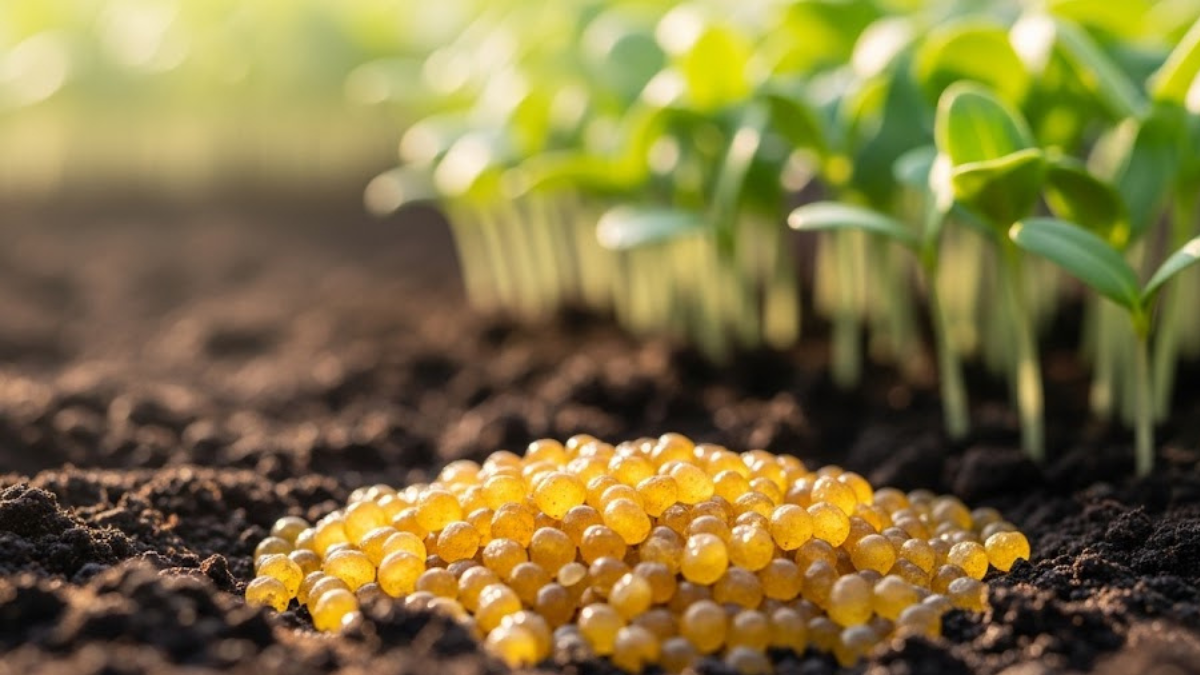

Discover how Mannacote revolutionizes plant nutrition. Learn about its polymer coating technology, release mechanisms, and why it is the preferred choice for sustainable agriculture.
also read: https://soutaipassu.com/rob-reiner/
Introduction
In the pursuit of agricultural excellence and sustainable gardening, the method of delivering nutrients to plants has undergone a massive transformation. For decades, traditional fertilizers were the gold standard, but they often came with significant drawbacks, such as nutrient leaching and the need for frequent applications. Today, the industry has shifted toward high-efficiency solutions, and at the forefront of this evolution is mannacote. This specialized controlled-release fertilizer (CRF) technology has become a cornerstone for professional growers and hobbyists alike, offering a precise, reliable, and environmentally friendly way to nourish plants over extended periods.
Understanding the mechanics of mannacote is essential for anyone looking to optimize crop yield or maintain lush, vibrant landscapes. Unlike conventional fertilizers that release their nutrients almost immediately upon contact with water, this technology utilizes advanced polymer coatings to meter out nutrition based on the plant’s needs. In this guide, we will explore the science behind the coating, the practical benefits of its use, and how it contributes to a more sustainable future for global food production.
What Exactly is Mannacote?
At its core, mannacote is a premium controlled-release fertilizer consisting of high-quality nutrient granules encapsulated in a specialized polymer resin. This “intelligent” coating acts as a semi-permeable membrane. The primary goal of this design is to prevent the “flush” of nutrients that often occurs with standard fertilizers, which can lead to root burn or, worse, the loss of expensive nutrients into the groundwater through leaching.
The term mannacote is often associated with reliability in the horticultural world. By providing a steady stream of nitrogen, phosphorus, potassium, and essential micronutrients, it ensures that plants do not experience the “boom and bust” cycles of nutrition. This steady supply is critical for the development of strong root systems and resilient foliage, making it a favorite for nursery stock, container gardens, and high-value turf management.
The Science of the Release Mechanism
The genius of mannacote lies in its reaction to environmental factors, specifically soil temperature. Once applied to the soil or growing medium, moisture begins to penetrate the polymer shell through osmosis. This moisture dissolves the solid nutrient core inside the prill, creating a concentrated liquid solution.
Once the internal solution is formed, the nutrients begin to diffuse through the coating and into the root zone. However, this diffusion is not random. The rate of release is governed almost entirely by temperature. As the soil warms up during the growing season, the pores of the polymer coating expand slightly, allowing more nutrients to pass through precisely when the plant’s metabolic activity is at its peak. Conversely, when temperatures drop, the release slows down, preventing the accumulation of unused salts in the soil.
Factors Influencing Nutrient Delivery
While temperature is the primary driver, the longevity of mannacote is also determined by the thickness of the polymer coating applied during manufacturing. Products are typically rated by their “longevity,” such as 3-4 months, 5-6 months, or even 12-14 months. This allows growers to select a specific formula that matches the entire growing cycle of their specific crop with just a single application.
Key Benefits of Using Mannacote in Modern Agriculture
The adoption of mannacote is not just a trend; it is a strategic move for those looking to maximize efficiency and minimize labor. In large-scale operations, the cost of labor can be one of the highest overhead expenses. By using a controlled-release product, the need for repeated top-dressing or liquid feeding is significantly reduced, if not eliminated entirely.
1. Enhanced Nutrient Use Efficiency (NUE)
Traditional fertilizers are notoriously inefficient. It is estimated that a significant portion of nitrogen applied in conventional farming is lost to the atmosphere or washed away. mannacote solves this by keeping the nutrients contained until the plant is ready to absorb them. This leads to a much higher Nitrogen Use Efficiency (NUE), ensuring that every dollar spent on fertilizer actually contributes to plant growth.
2. Reduced Environmental Impact
One of the most pressing issues in modern environmental science is the contamination of local waterways by agricultural runoff. Excessive nitrates in water systems can lead to algal blooms and the depletion of oxygen in aquatic habitats. Because mannacote releases nutrients slowly and is designed to be absorbed by roots immediately, the risk of runoff and leaching is dramatically lowered, making it a “green” choice for eco-conscious growers.
3. Safety and Crop Consistency
Root burn is a common problem when using high-salt index fertilizers. Since mannacote meters out small amounts of nutrients at a time, the salt concentration in the soil remains low and stable. This safety margin is particularly important for delicate seedlings or high-value ornamental plants that are sensitive to chemical stress.
| Feature | Mannacote (CRF) | Traditional Water-Soluble Fertilizer |
|---|---|---|
| Release Pattern | Slow and Temperature-Dependent | Immediate and Moisture-Dependent |
| Application Frequency | Once per Season | Multiple times (Weekly/Bi-weekly) |
| Risk of Leaching | Very Low | High |
| Labor Requirement | Minimal | High |
| Nutrient Consistency | Steady / Predictable | Spiky / Unpredictable |
Optimal Application Strategies for Success
To get the most out of mannacote, it must be applied correctly. While the technology is robust, the placement and timing can influence the final results. There are two primary methods of application: incorporation and top-dressing.
Incorporation involves mixing the granules directly into the potting soil or substrate before planting. This is considered the most effective method as it ensures the nutrients are evenly distributed throughout the root zone from day one. Top-dressing, on the other hand, involves spreading the granules on the surface of the soil around existing plants. While effective, it relies on irrigation to move the released nutrients down into the soil.
Best Practices for Professional Results
- Match Longevity to Crop Cycle: If you are growing a short-term bedding plant, a 3-month mannacote formula is ideal. For perennial shrubs, look for an 8-9 month release profile.
- Store in a Cool, Dry Place: To prevent the premature breakdown of the polymer coating, always keep unused bags away from direct sunlight and excessive humidity.
- Avoid Physical Damage: Do not crush or grind the prills. If the polymer coating is cracked, the “controlled” aspect of the release is lost, and the nutrients will dump into the soil all at once.
The Role of Mannacote in Sustainable Horticulture
As we move further into 2026, the focus on “Precision Agriculture” continues to grow. Tools like mannacote are essential in this landscape because they allow for data-driven nutrition. By knowing exactly how much nitrogen is released at 20°C versus 30°C, growers can calculate their inputs with mathematical precision.
This level of control is particularly important in urban environments and “smart” greenhouses. In these settings, space is at a premium and resources must be used sparingly. mannacote provides a “set and forget” solution that fits perfectly into automated systems, allowing technology to handle the heavy lifting of plant nutrition while the grower focuses on crop health and aesthetics.
Frequently Asked Questions
1. Does Mannacote work in rainy climates? Yes. While moisture is needed to start the process, the release rate is controlled by temperature, not the amount of rainfall. This makes mannacote much more reliable in tropical or rainy regions than standard fertilizers.
2. Can I use Mannacote for indoor houseplants? Absolutely. It is an excellent choice for indoor plants because it prevents the buildup of salts that can occur in pots and reduces the chore of remembering to liquid-feed your plants every two weeks.
3. Is the polymer coating biodegradable? Many modern mannacote formulations use advanced resins designed to break down over several years once the nutrients have been depleted, reducing long-term plastic residue in the soil.
4. Can Mannacote “burn” my plants if I use too much? While it is much safer than traditional fertilizer, extreme over-application can still cause issues. Always follow the recommended dosage on the packaging based on your container size or square footage.
5. How does soil pH affect Mannacote? The polymer coating is designed to be highly resistant to pH fluctuations, ensuring that the nutrient release remains consistent across a wide range of soil types, from acidic to alkaline.
6. Can I use it in hydroponic systems? Standard mannacote is designed for soil or soil-less substrates (like peat or coco coir). It is generally not used in pure recirculating liquid hydroponics, as the granules need a solid medium to stay in place.
7. Does it contain micronutrients? Most “Plus” versions of mannacote include a full spectrum of trace elements like Iron, Manganese, Boron, and Zinc, which are vital for overall plant health beyond just N-P-K.
8. Why do the empty shells stay in the soil after a year? After the nutrients are gone, the hollow polymer shells (ghost prills) may remain visible. They are harmless and will eventually degrade, but their presence doesn’t mean the fertilizer is still active.
9. Can I mix Mannacote with other fertilizers? Yes, but it is rarely necessary. Some growers use a small amount of “starter” fertilizer for an immediate hit, then rely on mannacote for the rest of the season.
10. Is it safe for edible crops like vegetables and herbs? Yes. Controlled-release technology is widely used in commercial vegetable production to ensure high yields and healthy produce without excessive chemical runoff.
Conclusion
In summary, mannacote represents the pinnacle of modern plant nutrition. By harnessing the power of polymer science, it provides a solution that is efficient, safe, and environmentally responsible. Whether you are a commercial farmer aiming for peak yields or a home gardener wanting the best for your roses, this controlled-release technology offers a level of precision that traditional methods simply cannot match. By choosing mannacote, you are not just feeding your plants; you are investing in a smarter, more sustainable way to grow, ensuring that your green spaces thrive with minimal effort and maximum impact.