

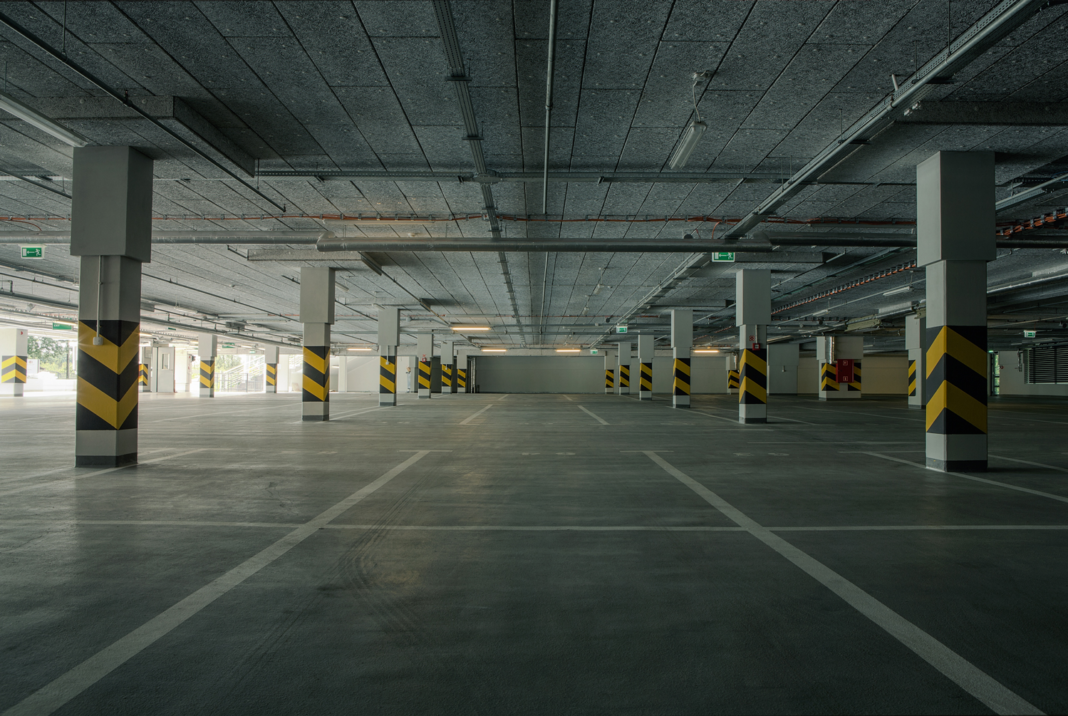

A modern parking garage features a multi-story structure for high-density storage and protection of motor vehicles. Some of these facilities integrate with office buildings and apartments to provide direct access for employees and residents. Various features help maximize the space usage of garages, especially in high-density urban areas. Maximizing space efficiency in parking garages entails the following:
Mechanical Automated Lifts
Mechanical systems, such as automated lifts, maximize space by stacking vehicles. These heavy-duty lifting platforms can store multiple cars vertically within a single ground-level layout. Specialized lifting mechanisms conserve space by eliminating the need for large driving lanes required for vehicle maneuvering. When an automated lift hoists a car onto an upper level, it packs the vehicles closely. Since the driver is not present during storage, no clearance for opening car doors is needed. This dense arrangement helps increase the garage’s overall capacity. The layout requires fewer traditional interior concrete ramps and pedestrian walkways.
Multi-Story Vertical Structures
Multi-story vertical structures utilize height to accommodate a large volume of vehicles; vertical expansion allows for more car stalls without increasing the building’s footprint. While the base of the structure remains fixed, the addition of multiple floors increases the total available parking capacity. The design of these facilities includes ramps or elevators to facilitate movement between different levels.
Cities may face limited ground-level property; building upward represents an architectural solution to accommodate vehicles. This physical integration allows the parking infrastructure to occupy the same geographic footprint as residential or commercial zones. The garage with multiple levels can be directly beneath an apartment building, so developers don’t need to acquire additional land for parking. The integration helps preserve the surrounding ground level for green spaces or public use.
Angled Stall Layouts
Angled parking optimizes the available floor space inside a garage by making vehicle maneuvering easier. This configuration helps the facility utilize floor shapes that might otherwise go unused. The angled design matches the natural turning radius of automobiles, allowing for a more compact arrangement across the deck footprint. While a standard straight layout requires wide paths, angled slots help reduce the required width of the internal driving lanes.
The geometry of angled stalls may minimize the dead space that occurs at the ends of some parking rows. When vehicle spaces are aligned in a slanted pattern, they fit tightly against each other. This helps pack a higher density of cars into a single row. Drivers can pull into and back out of angled stalls with minimal steering adjustments; this may reduce the risk of blocking traffic during parking attempts.
Designated Compact Zones
A designated compact zone allows parking garages to allocate spaces tailored for smaller cars. This targeted zoning approach maximizes space efficiency by converting tight corners and shallow floor sections into usable car stalls. The structural features of compact zones may include the following attributes:
- Reduced stall dimensions
- Narrower driving lanes
- Distinct pavement markings
- Optimized column spacing
Reduced stall dimensions can match the physical scale of smaller modern vehicles. This allows the facility to pack more spaces into a single row. Since some subcompact cars do not require a wide clearance, the garage is able to accommodate narrower stalls. Narrower driving lanes help free up more space for vehicle storage. If there is a level with columns that prevent large vehicles from parking, garage developers may be able to convert these spaces into smaller stalls for compact cars.
Digital Reservation Systems
Digital reservation systems help maximize space efficiency by allowing drivers to secure spots ahead of time. This booking capability can make sure every stall is utilized through precise demand data. Management teams coordinate vehicle arrivals to match the garage’s capacity. When a driver arrives with a reservation, the system routes them to an open space; this structured process may reduce internal traffic jams. The data from booking allows operators to plan for consistent space availability across high-demand periods.
Learn More About Parking Garages
A parking garage is able to enhance floor-space utilization by designating spots for both large and small vehicles. This specialized layout feature may prevent larger vehicles from encroaching upon adjacent spaces. Garage developers who design facilities with narrower lanes and angled stalls help to maximize the space used. Look for parking garages with space-saving features today.