

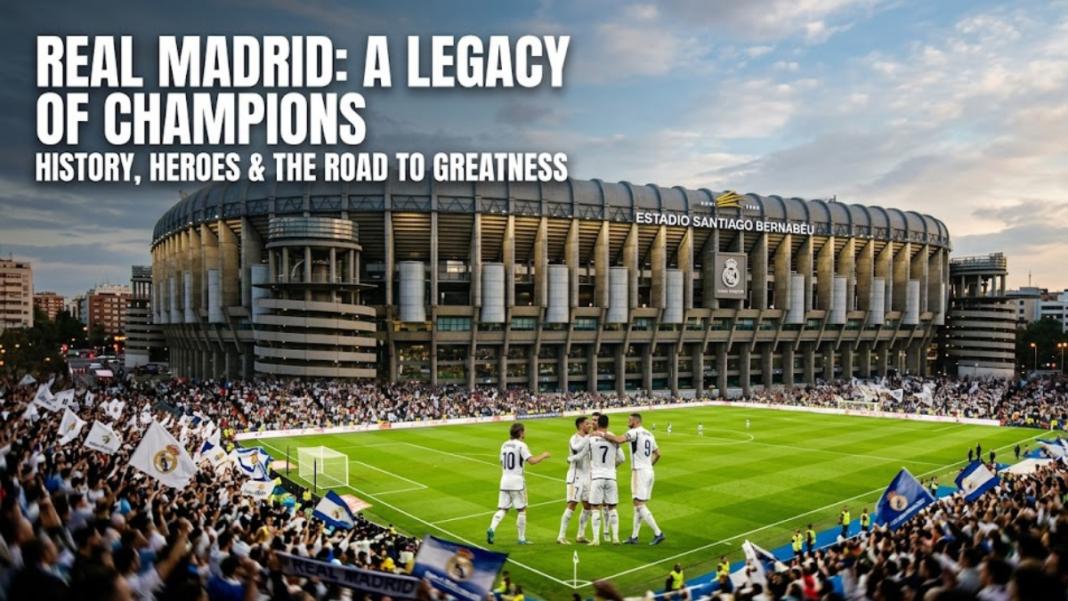

In the world of professional sports, few names command as much respect, admiration, and awe as Real Madrid. Known globally as “Los Blancos” due to their iconic all-white kits, this club is not just a football team; it is a global institution representing excellence, ambition, and a relentless pursuit of victory. Based in Madrid, Spain, the club has built a legacy that spans over a century, cementing its place as the most successful football club of the 20th century according to FIFA.
also read: https://soutaipassu.com/samantha-speno/
The Foundations of Greatness: A Brief History
The story of Real Madrid began in 1902 when it was founded as Madrid Football Club. Unlike many other clubs that were born out of industrial roots, this club quickly gained the favor of the Spanish monarchy. In 1920, King Alfonso XIII granted the club the title “Real,” which translates to “Royal” in English. This royal patronage is still reflected in the crown that sits atop the club’s crest today.
The club’s early years were marked by steady growth, but it was the post-Spanish Civil War era that truly defined its trajectory. Under the visionary leadership of President Santiago Bernabéu Yeste, the club underwent a massive transformation. Bernabéu didn’t just want to win; he wanted to build the most professional and modern club in the world. He oversaw the construction of a world-class stadium and initiated the scouting of the best players from around the globe, setting the stage for what would become the most dominant era in football history.
The Santiago Bernabéu: A Cathedral of Football
The home of Real Madrid, the Santiago Bernabéu Stadium, is more than just a venue; it is a landmark of the city and a temple for football fans. Located in the heart of the Chamartín district, the stadium has witnessed some of the most historic moments in sports.
| Feature | Details |
|---|---|
| Opened | December 14, 1947 |
| Current Capacity | Approximately 81,044 (expanding) |
| Location | Paseo de la Castellana, Madrid |
| Notable Events | 4 European Cup Finals, 1982 World Cup Final |
| Recent Status | Undergoing major high-tech renovation |
The recent renovations have transformed the Bernabéu into a multi-purpose arena. With a retractable roof and a revolutionary pitch-removal system, the stadium is now equipped to host concerts, basketball games, and even NFL matches. This modernization ensures that the club remains financially competitive and provides a cutting-edge experience for its supporters.
An Unrivaled Trophy Cabinet
The success of Real Madrid is best measured by the sheer volume of silverware they have accumulated. Their dominance is particularly evident in the UEFA Champions League, a competition that many fans believe belongs to the club.
Major Domestic and International Honors:
- La Liga Titles: Over 35 titles, making them the most successful team in Spanish history.
- UEFA Champions League: A record-breaking 14+ titles (The Decimocuarta).
- Copa del Rey: 20 titles.
- FIFA Club World Cup: A record number of wins (5+).
- UEFA Super Cup: Multiple titles.
The club’s relationship with the Champions League is legendary. From the five consecutive titles won in the 1950s to the modern “three-peat” achieved between 2016 and 2018, Real Madrid has shown an uncanny ability to perform on the biggest European stage.
The Galácticos Era: A Revolution in Strategy
At the turn of the millennium, President Florentino Pérez introduced the “Galácticos” policy. The idea was simple yet revolutionary: every summer, the club would sign the biggest superstar in world football. This strategy was not just about winning games; it was about building a global brand that transcended the sport.
The first wave of Galácticos included legends like Luís Figo, Zinedine Zidane, Ronaldo Nazário, and David Beckham. These players brought immense flair to the pitch and attracted millions of fans from Asia, the Americas, and beyond. While the era had its ups and downs in terms of consistency, it fundamentally changed how football clubs operate as commercial entities. Real Madrid proved that having the best players in the world could lead to massive commercial success, which in turn funded more high-profile transfers.
Iconic Players Who Defined the White Shirt
To understand Real Madrid, one must look at the individuals who wore the number 7, the number 10, and the captain’s armband. These players became symbols of the club’s values.
- Alfredo Di Stéfano: The man who changed everything. He was a complete footballer who led the team to five consecutive European Cups.
- Raúl González: A homegrown hero and the embodiment of Madridismo. Raúl was the club’s all-time leading appearance maker for years.
- Cristiano Ronaldo: Perhaps the greatest goalscorer in the history of the sport. During his nine years at the club, he broke almost every scoring record and helped secure four Champions League trophies.
- Zinedine Zidane: First as a player with his iconic volley in the 2002 final, and later as a manager who won three consecutive Champions League titles.
- Luka Modric: A modern legend whose longevity and midfield mastery earned him a Ballon d’Or while playing for the club.
La Fábrica: The Youth Academy
While Real Madrid is famous for buying superstars, their youth academy, known as “La Fábrica” (The Factory), is one of the most productive in the world. The club places a high value on developing local talent who understand the weight of the jersey.
The academy provides a pathway for young players to reach the first team or find success in other top leagues across Europe. Notable graduates include Iker Casillas, Guti, Raúl, and more recently, players like Dani Carvajal and Nacho Fernández. The presence of academy players in the squad ensures that the club maintains its cultural identity even as it recruits international stars.
El Clásico: The Greatest Rivalry in Sports
No discussion of Real Madrid is complete without mentioning their rivalry with FC Barcelona. Known as El Clásico, this match is watched by hundreds of millions of people worldwide. It is more than just a football game; it is a clash of cultures, politics, and identities.
The rivalry is intense because both clubs are constantly competing for the same domestic and international trophies. Over the years, El Clásico has featured the greatest players in history, from the Di Stéfano vs. Kubala era to the iconic Messi vs. Ronaldo showdowns. For a Real Madrid fan, winning El Clásico is often regarded with the same importance as winning a major trophy.
The Business of Football and Global Influence
Today, Real Madrid consistently ranks as one of the most valuable sports teams in the world. Their business model is built on diversified revenue streams, including television rights, sponsorships, and a massive retail presence. The club has millions of followers across social media platforms, making it a powerful marketing tool for global brands.
Their influence extends beyond the pitch through the Real Madrid Foundation, which uses sports as a tool for social integration and education in over 80 countries. This commitment to social responsibility helps maintain the club’s image as “The King of the World” not just in footballing terms, but as a force for good.
Frequently Asked Questions
1. Who is the current president of Real Madrid? Florentino Pérez is the current president. He is widely credited with modernizing the club’s finances and bringing in the “Galácticos.”
2. Why is the club called “Real”? The word “Real” means “Royal” in Spanish. It was gifted to the club by King Alfonso XIII in 1920.
3. Does Real Madrid have other sports teams? Yes, the club has a highly successful professional basketball team, Real Madrid Baloncesto, which has won numerous EuroLeague and domestic titles.
4. How can I visit the Santiago Bernabéu? The club offers the “Bernabéu Tour,” which allows fans to see the trophy room, dressing rooms, the pitch-side area, and the museum.
5. What is the meaning of the “Hala Madrid” chant? “Hala Madrid” is a phrase of encouragement that roughly translates to “Go Madrid” or “Forward Madrid.” It is also the name of the club’s official anthem.
6. Who owns Real Madrid? Unlike many clubs owned by billionaires or sovereign wealth funds, Real Madrid is owned by its members, known as “socios.” They elect the president and have a say in major club decisions.
7. How many times has Real Madrid won the treble? Interestingly, despite their massive success, Real Madrid has never won a “Continental Treble” (League, Domestic Cup, and Champions League in one season), although they have won many doubles.
8. What are the colors of the away kits? While the home kit is always white, away kits have historically varied between purple, blue, black, and even pink or green in recent years.
9. Which player has the most appearances for the club? Raúl González holds the record for the most appearances with 741 matches played.
10. Is there a women’s team at Real Madrid? Yes, Real Madrid Femenino was officially established in 2020 after the club absorbed CD Tacón, and it is rapidly becoming a force in women’s football.
Conclusion
In summary, Real Madrid represents the pinnacle of sporting achievement. Through a combination of historical prestige, a world-class stadium, a legendary youth academy, and a consistent ability to attract the world’s best talent, the club has maintained its status at the top of the football hierarchy. Whether it is their record-breaking Champions League runs or their intense rivalry with Barcelona, the club continues to captivate the hearts of millions. To support Real Madrid is to support a legacy of excellence that shows no signs of slowing down.