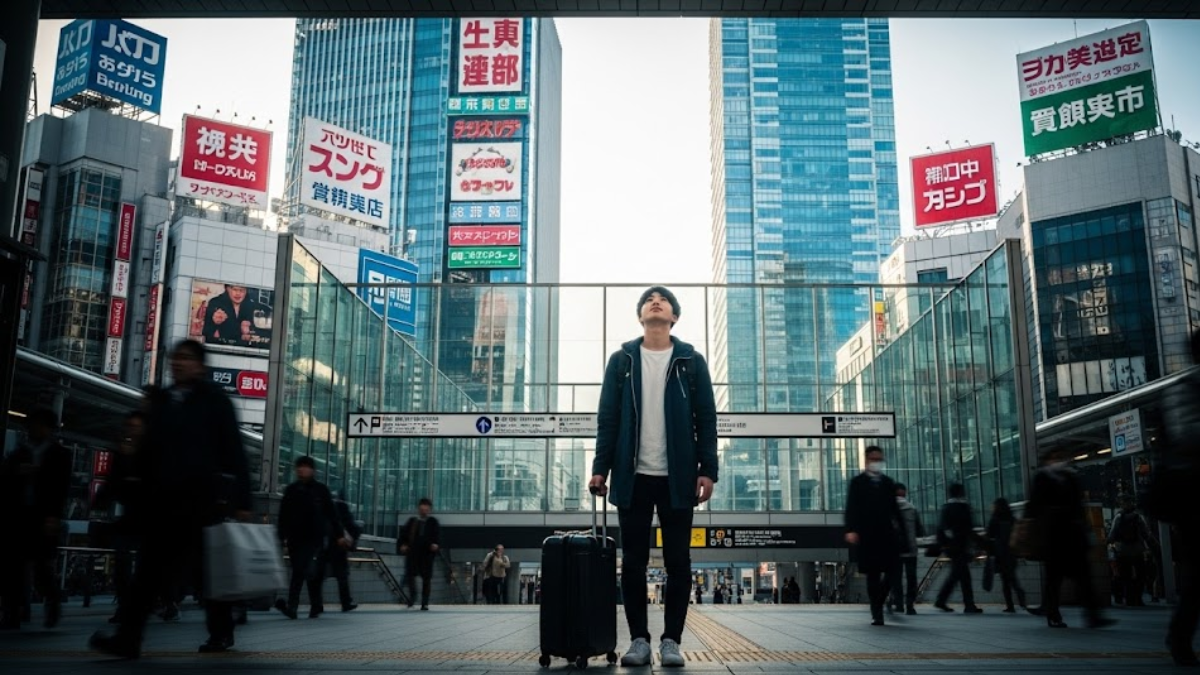
The Ultimate Guide to Jyokyo: Navigating the Cultural Phenomenon of Moving to Tokyo
Master the art of Jyokyo. Learn about the Japanese tradition of moving to Tokyo for work or study, including costs, cultural impact, and survival tips.
also read: https://soutaipassu.com/enerstor/
Introduction
The term jyokyo (上京) is far more than a simple geographical relocation; in Japan, it represents a rite of passage, a pursuit of ambition, and a pivotal life chapter. Literally translating to “going to the capital,” jyokyo specifically refers to the act of moving from rural areas or smaller cities to the sprawling metropolis of Tokyo. Whether it is a student entering a prestigious university or a young professional seeking a career in a global corporation, the journey toward the capital is a cornerstone of the Japanese dream.
In this guide, we will delve deep into the nuances of jyokyo, exploring its historical roots, the psychological weight it carries in modern Japanese society, and the practicalities required to survive and thrive in one of the world’s most competitive cities. From managing the high cost of living to overcoming “Tokyo shock,” this article serves as a definitive resource for understanding this unique cultural movement.
The Historical Roots of Jyokyo
The concept of moving toward the center of power is deeply embedded in the Japanese psyche, dating back centuries. During the Edo period (1603–1867), the “Sankin-kotai” system required feudal lords (daimyo) to reside in Edo (modern-day Tokyo) every other year. This created a massive influx of people, goods, and culture toward the capital, establishing it as the undisputed heart of the nation.
Following the Meiji Restoration in 1868, when the Emperor moved from Kyoto to Tokyo, the term jyokyo became synonymous with modernization and success. Moving to Tokyo was no longer just about political duty; it became the only way for ambitious individuals to access Western education, new technologies, and the burgeoning industrial economy. This historical momentum created a centralized structure that continues to pull millions toward Tokyo today.
The Modern Motivation: Why Millions Choose Jyokyo
In contemporary Japan, the decision to undertake jyokyo is driven by several socio-economic factors. Despite the rise of remote work and digital nomadism, Tokyo remains the primary hub for almost every major industry, including finance, media, fashion, and technology.
Educational Aspirations
For many, the journey begins at age 18. Tokyo is home to the nation’s most prestigious institutions, such as the University of Tokyo and Waseda University. Getting into a “Tokyo school” is often seen as the ultimate achievement for rural students, promising a fast track to elite employment. The concentration of educational resources in the capital makes jyokyo an almost mandatory step for those seeking academic excellence.
Career Advancement and Networking
Beyond education, the professional landscape in Tokyo is unparalleled. Approximately 30% of Japan’s total population resides in the Greater Tokyo Area, and a vast majority of listed companies are headquartered there. For a young adult in a small prefecture like Akita or Kagoshima, jyokyo represents an escape from limited local job markets and an entry into a world of diverse career paths and high-level networking.
The Reality Check: Costs and Logistics
While the dream of jyokyo is bright, the practical reality is often a stark contrast. Tokyo is consistently ranked as one of the most expensive cities in Asia. Transitioning from a rural lifestyle where space is abundant and costs are low to a 20-square-meter apartment in Shinjuku requires significant financial planning.
Cost of Living Comparison
To provide a clearer picture of what a newcomer might face, the following table compares the average monthly expenses for a single person in a rural prefecture versus central Tokyo.
| Expense Category | Rural Prefecture (Average) | Central Tokyo (Average) |
|---|---|---|
| Rent (1K Apartment) | ¥35,000 – ¥50,000 | ¥80,000 – ¥120,000 |
| Utilities (Gas/Water/Elec) | ¥10,000 – ¥15,000 | ¥15,000 – ¥20,000 |
| Groceries | ¥30,000 – ¥40,000 | ¥45,000 – ¥60,000 |
| Dining Out (Occasional) | ¥15,000 | ¥30,000+ |
| Transport (Commuting) | Often subsidized/Car-heavy | Train-based (Subsidized by employer) |
The “Initial Cost” Barrier
One of the biggest shocks for those embarking on jyokyo is the “initial cost” of renting an apartment. In Japan, this often includes reikin (key money/gift to the landlord), shikikin (security deposit), and agency fees. It is not uncommon for a newcomer to need ¥500,000 upfront just to secure a small studio apartment.
Preparing for the Move: A Jyokyo Checklist
Preparation is the difference between a successful transition and an early return home. If you are planning your own jyokyo, consider these essential steps:
- Financial Cushion: Save at least six months of living expenses before moving. Tokyo’s pace of spending is much faster than the countryside.
- Neighborhood Research: Don’t just look for “Tokyo.” Research specific wards. Setagaya is residential and green, while Minato is high-end and central. Consider commuting times on lines like the Chuo or Yamanote.
- Paperwork: Ensure your “Juminhyo” (residency certificate) is transferred promptly. This is vital for opening bank accounts and obtaining a mobile phone contract.
- Networking: Reach out to “Kenjin-kai” (prefectural associations) in Tokyo. These groups consist of people from the same hometown who help newcomers settle in.
- Mental Preparation: Acknowledge that you will likely feel lonely initially. The anonymity of the big city can be overwhelming after coming from a tight-knit rural community.
The Cultural Impact: “Tokyo Shock” and Identity
A major theme in Japanese literature and cinema (such as the works of Makoto Shinkai) is the emotional toll of jyokyo. Newcomers often experience “Tokyo Shock”—a feeling of alienation caused by the sheer scale of the city, the coldness of crowded trains, and the lack of familiar faces.
The Transformation of Speech
Many people who undergo jyokyo feel pressured to lose their regional dialects (ben). Using standard Japanese (Hyojungo) is often seen as a sign of being “citified” or professional. However, in recent years, there has been a counter-movement celebrating regional roots, with many young people proudly maintaining their accents as a unique identifier in a sea of millions.
Social Expectations
There is also a significant social pressure attached to jyokyo. Returning to one’s hometown after a few years without a clear “win” (like a promotion or a degree) can sometimes be perceived as a failure. This “no-return” mentality drives many to endure harsh working conditions and tiny living spaces just to maintain their status as a “Tokyoite.”
FAQs About Jyokyo
1. Is “Jyokyo” used for moving to cities like Osaka or Nagoya? No. Historically and linguistically, jyokyo only refers to moving to the capital (Tokyo). Moving to Osaka is called “Shin-Osaka” or simply moving to the city.
2. What is the best time of year for Jyokyo? The vast majority of people move in late March or early April, coinciding with the start of the Japanese fiscal and academic year.
3. Is it hard to find an apartment if you are a newcomer? It can be, especially if you don’t have a job yet. Many landlords require a “Guarantor” (typically a parent) or a specialized guarantee company.
4. Do people still use the term for short-term trips? Occasionally, older generations might use it for a business trip to Tokyo, but in modern slang, it almost exclusively refers to a permanent or long-term relocation.
5. What are “Jyokyo-bin”? These are specialized moving services or “moving flights” that offer discounted rates for students and young adults moving toward the capital during peak season.
6. Can I survive in Tokyo without speaking perfect Japanese? While Tokyo is international, the logistics of jyokyo (contracts, taxes, utility setup) are almost entirely in Japanese. High-level proficiency or a bilingual friend is essential.
7. Is shared housing common for those moving to Tokyo? Yes, “Share Houses” have become extremely popular for newcomers. They reduce initial costs and provide an instant social circle, helping to combat the loneliness of the big city.
8. What is the “U-Turn” phenomenon? This is when people who did jyokyo eventually decide to move back to their rural hometowns for a better work-life balance or to care for aging parents.
9. Are there government subsidies for Jyokyo? While there are few for moving to Tokyo, there are currently many subsidies for moving out of Tokyo back to rural areas to combat overpopulation.
10. How does the “Yamanote Line” affect living choices? Living inside the Yamanote loop is the ultimate goal for many, but it is the most expensive. Most people live on the outskirts and commute via lines that connect to major hubs like Shinjuku or Shibuya.
Conclusion
The act of jyokyo remains a powerful symbol of ambition and transformation in Japan. It is a journey that tests one’s financial resources, mental resilience, and sense of identity. While the costs are high and the city can be impersonal, the opportunities for personal and professional growth in Tokyo are unmatched. By understanding the historical significance and preparing for the practical challenges, anyone can turn their dream of moving to the capital into a successful reality. Whether you are chasing a corporate ladder or an artistic dream, Tokyo is a city that rewards those who have the courage to make the move.